

Animal Model: The Mouse
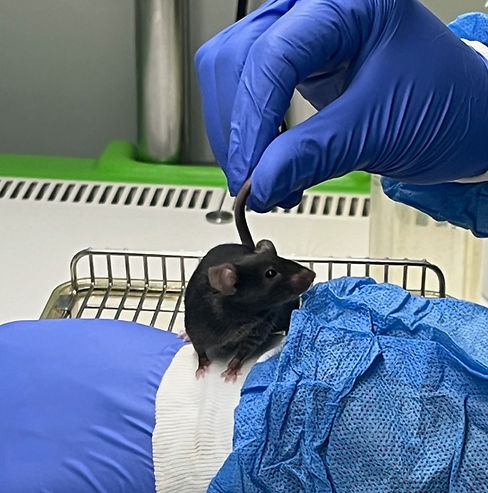
We use the Mouse as a model because mice share a high degree of genetic, molecular, and physiological conservation with humans, allowing interrogation of conserved pathways relevant to human health and disease. Their well-characterized genetics, availability of transgenic and knockout strains, and reproducible phenotypes enable hypothesis-driven mechanistic studies that cannot be performed in vitro. Established tools for imaging, longitudinal sampling, and controlled environmental and genetic manipulation increase experimental precision and translational relevance. Collectively, these features make mice an appropriate and powerful model for answering the specific biological questions pursued by our lab.
The use of animals in research is still very important
It is important to note that the use of animals for research is still very important. There are several questions that cannot be addressed otherwise:
-
We cannot use in silico systems to address questions were there is not enough knowledge;
-
Cell culture of cell lines does not reflect neither T cell precursors as they differentiate, nor as they start leukemia;
-
Ex vivo culture of mouse and human cells is an important tool in our lab, but they have limitations and do not permit addressing several specific questions, namely the mechanisms of leukemia initiation and progression.


The 3 R’s recommendations
All animal work is conducted in accordance with the FELASA guidelines and relevant national and institutional regulations. We respect the 3 R’s recommendations for the use of animals in research: Replacement, Reduction, Refinement. This means that whenever possible, we replace animal experimentation by ex vivo analyses of human and mouse cells, we reduce the number of animals to a minimum but without compromising the capacity of the experiments to generate meaningful and significant results, and we refine techniques and the training of our personnel to ensure that our results yield significant data and the animals are handled by the personnel with the best training possible.
All animal work is conducted in accordance with the FELASA guidelines and relevant national and institutional regulations. We respect the 3 R’s recommendations for the use of animals in research: Replacement, Reduction, Refinement. This means that whenever possible, we replace animal experimentation by ex vivo analyses of human and mouse cells, we reduce the number of animals to a minimum but without compromising the capacity of the experiments to generate meaningful and significant results, and we refine techniques and the training of our personnel to ensure that our results yield significant data and the animals are handled by the personnel with the best possible training.
